Updated 2026-10-11 · Originally published 2026-01-14
Fatigue, weight changes and brain fog have several possible explanations, so normal thyroid testing does not make symptoms imaginary or prove a hidden thyroid diagnosis. Review which tests were performed and what question they addressed. Your medical clinician can assess whether additional thyroid testing, structural evaluation or a broader investigation is appropriate, rather than repeatedly pursuing the same explanation.
Evidence note: The original educational article below is preserved. Added guidance distinguishes established diagnostic methods from hypotheses and test limitations; original claims are not proof that a diet, infection panel or supplement causes or reverses thyroid disease.
"Your thyroid looks fine." It's one of the most frustrating sentences in medicine — and it's one we hear from nearly every new patient who walks through our door.
If you have all the classic signs of hypothyroidism — the fatigue, the weight gain, the hair loss, the brain fog, the depression — but you've been told your labs are normal, you are not imagining things. And you are not alone. Here's exactly what's happening and what actually needs to be tested.
The Problem With "Normal" Thyroid Testing
When most doctors order a "thyroid test," they run TSH. That's it. One marker.
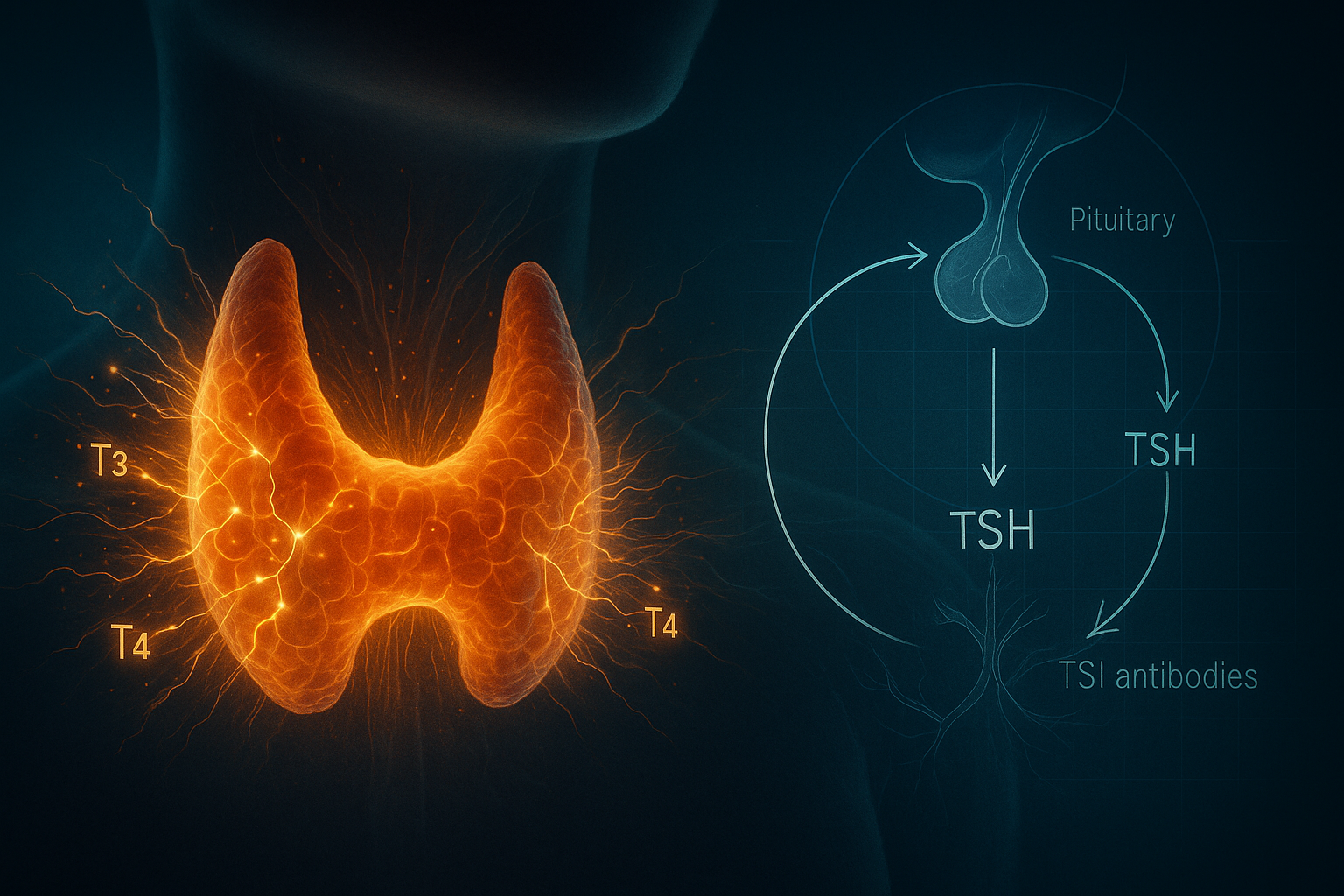
TSH stands for thyroid-stimulating hormone, and it's produced by your pituitary gland — not your thyroid. It measures how hard your brain is signaling your thyroid to produce hormone. But it tells you nothing about:
- How much thyroid hormone your thyroid is actually producing
- Whether your body is converting that hormone into its active form
- Whether your cells can even use the hormone that's available
- Whether your immune system is attacking your thyroid
A normal TSH with a broken conversion pathway, high antibodies, or elevated Reverse T3 will still read "normal." And you'll still feel terrible.
What a Complete Thyroid Panel Actually Includes
A thorough thyroid evaluation includes all of the following:
- TSH — still useful as a starting point, but never sufficient alone
- Free T4 — the hormone your thyroid produces most
- Free T3 — the active form of thyroid hormone your cells actually use
- Reverse T3 (rT3) — an inactive form that competes with Free T3; high levels block thyroid function even when other markers look normal
- Thyroid Peroxidase Antibodies (TPO-Ab) — the primary Hashimoto's marker
- Thyroglobulin Antibodies (TgAb) — a second Hashimoto's marker that's positive in some patients where TPO is not
What Is Reverse T3 and Why Does It Matter?
This one is worth spending extra time on because it explains so many "normal labs, terrible symptoms" cases.
Your body converts T4 into T3 — the active hormone — under normal conditions. But under stress, illness, significant caloric restriction, or certain nutrient deficiencies, your body begins shunting T4 toward Reverse T3 instead. Reverse T3 is essentially a decoy — it fills the same cell receptors as Free T3 but produces no effect. It physically blocks the active hormone from doing its job.
The result: every other thyroid marker can look completely normal while your cells are effectively in a state of hypothyroidism. This is almost never tested in a standard workup.
What Else Can Mimic or Worsen Thyroid Symptoms?
Several factors outside the thyroid gland itself can produce or worsen identical symptoms — and almost none of them are tested in conventional care:
Adrenal dysfunction: Chronic stress dysregulates cortisol production, which directly impairs T4-to-T3 conversion and reduces cellular sensitivity to thyroid hormone. You can have adequate thyroid hormone levels and still experience full hypothyroid symptoms if your adrenals are burned out.
Viral infections: EBV, HHV-6, and other viruses can trigger autoimmune thyroid disease or produce profound fatigue that mimics thyroid dysfunction. Post-viral thyroid disruption — including post-COVID thyroiditis — is a real and underdiagnosed phenomenon.
Nutrient deficiencies: Selenium, zinc, vitamin D, iron, and iodine are all required for proper thyroid hormone production and conversion. Deficiencies in any of these can produce thyroid-like symptoms even with technically adequate hormone levels.
Food sensitivities: Gluten drives intestinal inflammation that can both worsen Hashimoto's and contribute to malabsorption of nutrients required for thyroid function. Food sensitivity testing often reveals triggers that have been quietly driving symptoms for years.
Leaky gut: Intestinal permeability contributes to the autoimmune cascade and also impairs conversion of thyroid hormone in the gut itself.
What You Should Ask Your Doctor to Test
If you have thyroid symptoms and have only had TSH tested, ask specifically for:
- Free T3
- Free T4
- Reverse T3
- TPO antibodies
- TgAb antibodies
- Vitamin D, ferritin, zinc, magnesium
- EBV panel
If your doctor won't run these, it may be time to work with a provider who will.
How We Can Help
At Whole Family Medicine, our standard evaluation covers all of the above — plus adrenal testing, food sensitivity panels, stool analysis, and viral markers. We don't assume. We test.
TSH and free T4
TSH reflects the pituitary signal to the thyroid; free T4 helps assess circulating hormone. A clinician interprets the pair with symptoms, medication, pregnancy status and relevant history. Results after acute illness or a recent medication change may need different interpretation.
T3, antibodies and reverse T3
T3 is often more helpful in evaluating hyperthyroidism than diagnosing hypothyroidism. TPO or thyroglobulin antibodies may support evaluation of autoimmune thyroid disease; TSH-receptor antibodies address different questions. Reverse T3 is not routinely useful for diagnosing hypothyroidism or guiding replacement treatment in otherwise healthy outpatients. Availability does not establish clinical necessity.
Preparation and follow-up
Provide a complete medicine and supplement list, including biotin. Ask the ordering clinician whether fasting, dose timing or a temporary supplement pause is necessary for your specific test. Do not independently stop medication. Discuss what each proposed test would change, costs and who will explain the results.
What does normal actually mean?
A laboratory result includes a value, units, reference interval and collection date. A result inside that interval does not explain every symptom, and it should not automatically be reclassified as disease using an unvalidated optimal range. TSH with appropriate free T4 testing usually provides more useful information than routine reverse T3 testing.
What else can be considered?
Sleep disorders, anemia, medication effects, depression, anxiety, menopause, nutritional problems and other medical conditions can overlap with thyroid symptoms. Your primary medical clinician can help decide which possibilities warrant investigation. The aim is an accurate diagnosis, not a predetermined thyroid explanation.
How can you prepare?
Record when symptoms began, sleep patterns, major changes, medicines and supplements. Bring complete prior lab reports. A free discovery call can explain the practice’s assessment approach and whether a fuller consultation seems appropriate, but it cannot diagnose you or replace urgent care.
What can a second review contribute?
A second review can check whether the right clinical question was asked, whether the report was complete and whether important context was available. It should not begin by assuming that the original laboratory interval is wrong or that more testing must reveal hidden thyroid disease. Ask the reviewer to explain any proposed additional test and the decision it would change. If the results remain reassuring for thyroid function, persistent symptoms still deserve attention through an appropriate broader medical assessment rather than repeated thyroid-only testing.
Can normal blood tests answer a question about a neck lump?
No. A new lump, persistent hoarseness or swallowing difficulty raises a structural question that should be discussed with a medical clinician. Thyroid blood tests describe function; they do not establish whether a nodule requires ultrasound or further assessment. Do not repeatedly order an expanded blood panel as a substitute for evaluating a concerning neck finding. Seek urgent medical care for difficulty breathing.
Questions and answers
What can a second review contribute?
A second review can check whether the right clinical question was asked, whether the report was complete and whether important context was available. It should not begin by assuming that the original laboratory interval is wrong or that more testing must reveal hidden thyroid disease. Ask the reviewer to explain any proposed additional test and the decision it would change. If the results remain reassuring for thyroid function, persistent symptoms still deserve attention through an appropriate broader medical assessment rather than repeated thyroid-only testing.
Can normal blood tests answer a question about a neck lump?
No. A new lump, persistent hoarseness or swallowing difficulty raises a structural question that should be discussed with a medical clinician. Thyroid blood tests describe function; they do not establish whether a nodule requires ultrasound or further assessment. Do not repeatedly order an expanded blood panel as a substitute for evaluating a concerning neck finding. Seek urgent medical care for difficulty breathing.
Sources and further reading
- American Thyroid Association: Thyroid hormone treatment
- American Thyroid Association: Hashimoto’s thyroiditis
- NIDDK: Thyroid tests
- American Thyroid Association: Thyroid function tests
- NIDDK: Hashimoto’s disease
- NIDDK: Graves’ disease
- American Thyroid Association: Thyroid nodules
- Endocrine Society: Adrenal fatigue
- AAAAI: Limits of food IgG panel testing
- NIDDK: Diagnosis of celiac disease
- American Thyroid Association: Hypothyroidism during pregnancy
Educational information only, not medical advice, diagnosis or a treatment plan. Do not stop, start or change prescribed medication based on this resource. Pregnancy, children, significant heart symptoms and complex endocrine disease require appropriate medical care. Seek emergency help for chest pain, severe breathing difficulty, fainting, or high fever with confusion and a very fast heartbeat. A discovery call is not urgent medical care.