Updated 2026-10-11 · Originally published 2026-01-21
Stress and sleep problems can affect how you feel, but symptoms alone do not diagnose an adrenal disorder or a thyroid hormone deficiency. Review sleep, medicines, established thyroid results and the timing of symptoms separately. A commercial cortisol profile does not establish adrenal fatigue, and supportive stress care should not replace appropriate medical assessment or prescribed thyroid treatment.
Evidence note: The original educational article below is preserved. Added guidance distinguishes established diagnostic methods from hypotheses and test limitations; original claims are not proof that a diet, infection panel or supplement causes or reverses thyroid disease.
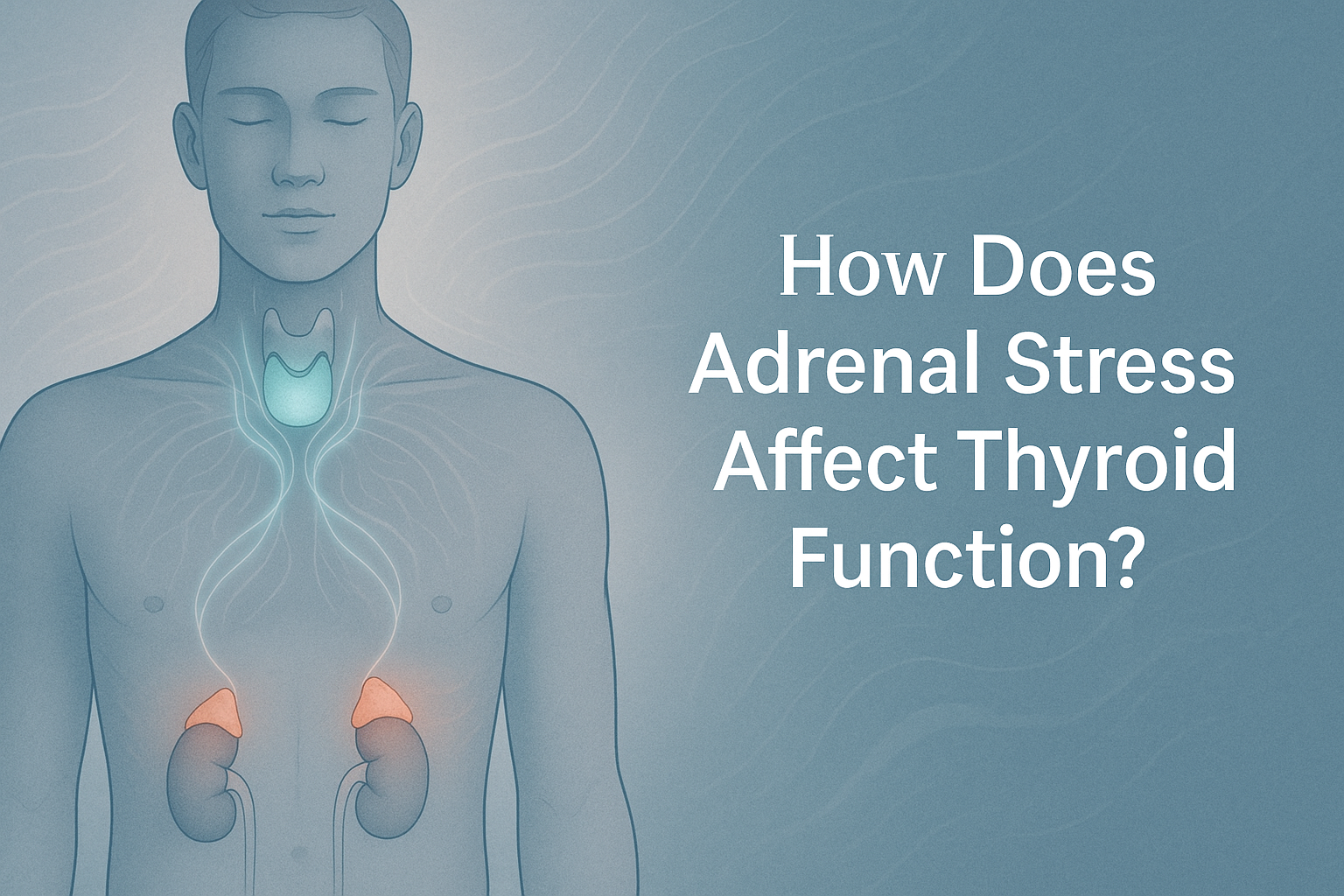
If you've been diagnosed with hypothyroidism — or you suspect you have it — and you're not getting better despite treatment, there's a good chance your adrenal glands are part of the problem. The thyroid and adrenal system are deeply intertwined, and chronic stress can undermine thyroid function even when the thyroid gland itself is working perfectly.
Here's how the connection works, why it's so commonly overlooked, and what comprehensive testing can reveal.
What Are the Adrenal Glands?
The adrenal glands are small walnut-sized glands that sit on top of your kidneys. They produce several critical hormones — most notably cortisol, your primary stress hormone, as well as DHEA, adrenaline, and others.
Cortisol is not just a "stress" hormone in the emotional sense. It regulates inflammation, immune function, blood sugar, sleep cycles, and — critically — the way your cells respond to thyroid hormone.
How Cortisol Affects Thyroid Hormone
The relationship between cortisol and thyroid function runs in multiple directions:
1. T4-to-T3 Conversion
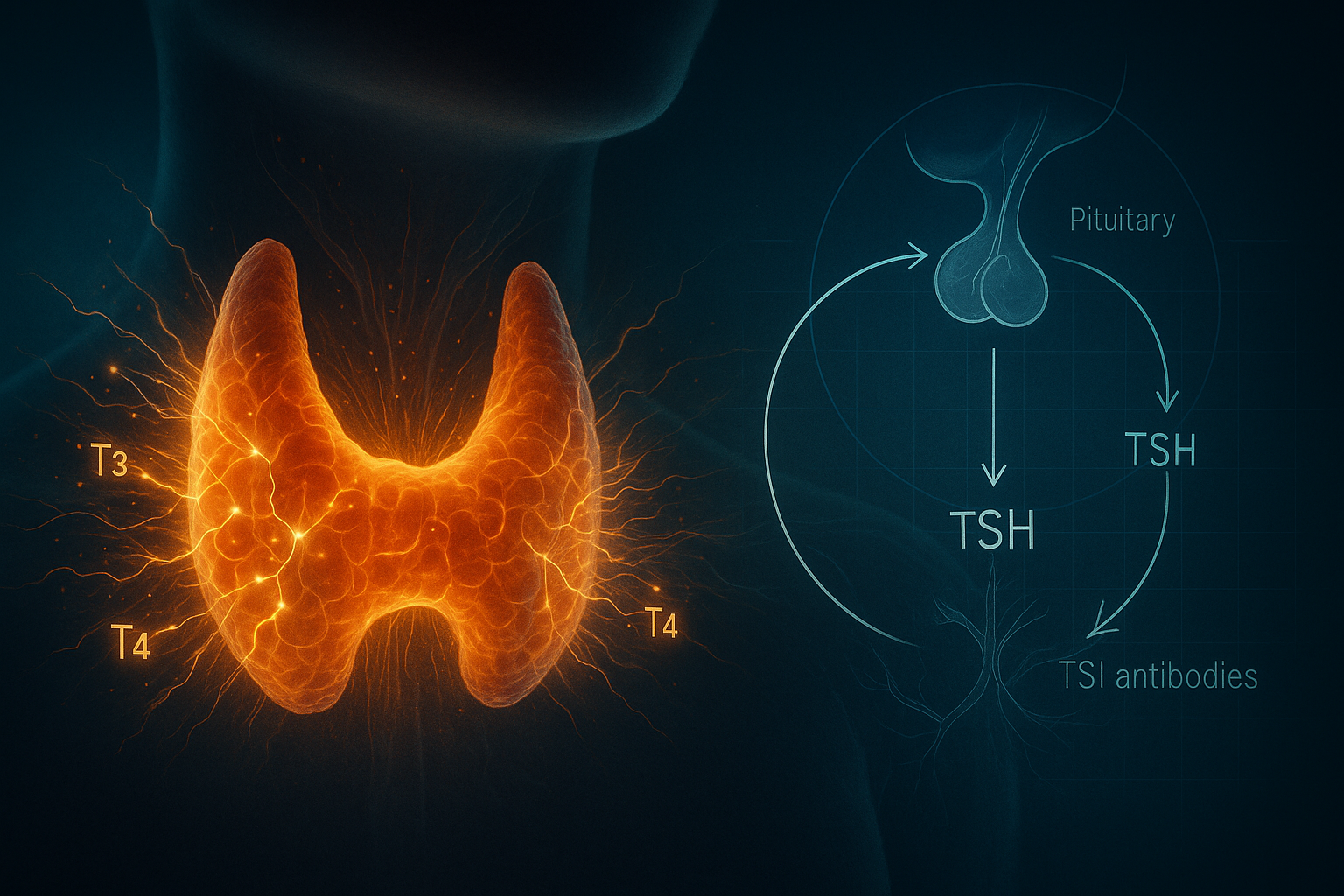
Your thyroid produces mostly T4 — the storage form of thyroid hormone. T4 must be converted into Free T3, the active form, before your cells can use it. This conversion process depends on adequate cortisol levels. When cortisol is chronically elevated or depleted, conversion is impaired — meaning you can have normal T4 and still have functionally low thyroid hormone at the cellular level.
2. Reverse T3 Overproduction
High cortisol from chronic stress drives your body to convert more T4 into Reverse T3 (the inactive decoy form) rather than Free T3. Reverse T3 fills thyroid receptor sites without activating them — essentially blocking active thyroid hormone even when levels appear adequate on a blood test.
3. Cellular Receptor Sensitivity
Even when Free T3 is adequate, chronically elevated cortisol can downregulate thyroid hormone receptors — meaning your cells become less responsive to the hormone, producing hypothyroid-like symptoms.
4. Immune Dysregulation
Cortisol is a natural anti-inflammatory. When it becomes dysregulated, immune activity becomes erratic — which can worsen or trigger autoimmune thyroid conditions like Hashimoto's.
What Is Adrenal Fatigue (and Is It Real)?
The term "adrenal fatigue" has become controversial in conventional medicine. The more accurate clinical description is HPA axis dysregulation — a disruption of the communication system between the hypothalamus, pituitary, and adrenal glands that governs cortisol production.
Symptoms include:
- Crushing fatigue, especially in the morning
- Energy crash in the mid-afternoon
- Salt cravings
- Difficulty handling stress
- Waking between 2–4 AM
- Recurrent infections
- Feeling "wired but tired"
- Worsening thyroid symptoms despite adequate medication
These symptoms are real. The debate is semantic. What matters is that the HPA axis can be tested and treated.
How We Test Adrenal Function
Standard blood cortisol tests are taken at a single point in time and tell you very little. Cortisol is a diurnal hormone — it should be highest in the morning and taper through the day. A single reading tells you nothing about the rhythm.
We use gender-specific comprehensive testing:
- Men: Adrenocortex Stress Panel — 4-point salivary cortisol throughout the day, plus DHEA, to map the full cortisol rhythm
- Women: HU-Map Panel — a more comprehensive hormone map that includes the cortisol rhythm alongside estrogen, progesterone, and DHEA, because hormonal interplay is more complex in women. This also distinguishes estrogen dominance from estrogen decline — two patterns that affect the thyroid differently.
Treating the Full Picture
If adrenal dysfunction is contributing to your thyroid symptoms, thyroid medication alone will not fix the problem. Treatment typically includes:
- Adaptogenic herbs to support HPA axis recovery (ashwagandha, rhodiola, eleuthero)
- Targeted supplementation (Vitamin C, B5, magnesium)
- Cortisol management strategies (sleep, blood sugar regulation, stress reduction)
- Dietary adjustments to reduce inflammatory burden
- Addressing underlying infections or autoimmune activity
The thyroid and adrenal system must be treated together for most patients to fully recover.
Stress symptoms versus adrenal disease
Poor sleep and prolonged stress deserve attention, but adrenal insufficiency and other endocrine diseases require validated diagnostic pathways. Suspected adrenal insufficiency needs appropriate medical assessment; severe weakness, vomiting, fainting or dehydration should not wait for a wellness consultation.
Why collection context matters
Time of day, medicines, menstrual timing, pregnancy, contraception and menopause can affect hormone results. A single value detached from this context can be misleading. The clinician should explain why blood, urine or saliva sampling is appropriate for the question being asked and what the test cannot conclude.
Questions before ordering
Ask whether the result would change your care, whether confirmatory testing is needed and whether an endocrinologist or gynecologist should be involved. Testing offered by the practice is selected through consultation, not a promise that every person needs every hormone measured.
What does normal actually mean?
A laboratory result includes a value, units, reference interval and collection date. A result inside that interval does not explain every symptom, and it should not automatically be reclassified as disease using an unvalidated optimal range. TSH with appropriate free T4 testing usually provides more useful information than routine reverse T3 testing.
What else can be considered?
Sleep disorders, anemia, medication effects, depression, anxiety, menopause, nutritional problems and other medical conditions can overlap with thyroid symptoms. Your primary medical clinician can help decide which possibilities warrant investigation. The aim is an accurate diagnosis, not a predetermined thyroid explanation.
How can you prepare?
Record when symptoms began, sleep patterns, major changes, medicines and supplements. Bring complete prior lab reports. A free discovery call can explain the practice’s assessment approach and whether a fuller consultation seems appropriate, but it cannot diagnose you or replace urgent care.
How can you separate a sleep problem from a hormone question?
A sleep history and an endocrine assessment ask different questions. Describe bedtime, awakenings, snoring, daytime sleepiness and whether fatigue improves after a better night. Then separately describe any established thyroid diagnosis and the results used to monitor it. Poor sleep does not prove abnormal cortisol, and an abnormal thyroid result does not make sleep assessment unnecessary. A useful review can keep both possibilities open without ordering every test at once. Ask which concern should be assessed first and what evidence would justify a hormone investigation.
What belongs in a stress-focused care plan?
Define the problem you hope to improve: trouble sleeping, difficulty managing work demands, persistent anxiety or another specific concern. Discuss support appropriate to that problem with your medical clinician, including mental-health or sleep-care options when indicated. Track the problem rather than treating a commercial hormone value as the only measure of progress. If you are already taking thyroid medication, maintain the prescribed follow-up. Stress management can be worthwhile on its own; it does not need to be marketed as a method of repairing the thyroid or curing an adrenal disorder.
Questions and answers
How can you separate a sleep problem from a hormone question?
A sleep history and an endocrine assessment ask different questions. Describe bedtime, awakenings, snoring, daytime sleepiness and whether fatigue improves after a better night. Then separately describe any established thyroid diagnosis and the results used to monitor it. Poor sleep does not prove abnormal cortisol, and an abnormal thyroid result does not make sleep assessment unnecessary. A useful review can keep both possibilities open without ordering every test at once. Ask which concern should be assessed first and what evidence would justify a hormone investigation.
What belongs in a stress-focused care plan?
Define the problem you hope to improve: trouble sleeping, difficulty managing work demands, persistent anxiety or another specific concern. Discuss support appropriate to that problem with your medical clinician, including mental-health or sleep-care options when indicated. Track the problem rather than treating a commercial hormone value as the only measure of progress. If you are already taking thyroid medication, maintain the prescribed follow-up. Stress management can be worthwhile on its own; it does not need to be marketed as a method of repairing the thyroid or curing an adrenal disorder.
Sources and further reading
- American Thyroid Association: Thyroid hormone treatment
- American Thyroid Association: Hashimoto’s thyroiditis
- NIDDK: Thyroid tests
- American Thyroid Association: Thyroid function tests
- NIDDK: Hashimoto’s disease
- NIDDK: Graves’ disease
- American Thyroid Association: Thyroid nodules
- Endocrine Society: Adrenal fatigue
- AAAAI: Limits of food IgG panel testing
- NIDDK: Diagnosis of celiac disease
- American Thyroid Association: Hypothyroidism during pregnancy
Educational information only, not medical advice, diagnosis or a treatment plan. Do not stop, start or change prescribed medication based on this resource. Pregnancy, children, significant heart symptoms and complex endocrine disease require appropriate medical care. Seek emergency help for chest pain, severe breathing difficulty, fainting, or high fever with confusion and a very fast heartbeat. A discovery call is not urgent medical care.